
From Business Analysis to a Tailored Solution
A Clear Foundation for Reliable Digitalization
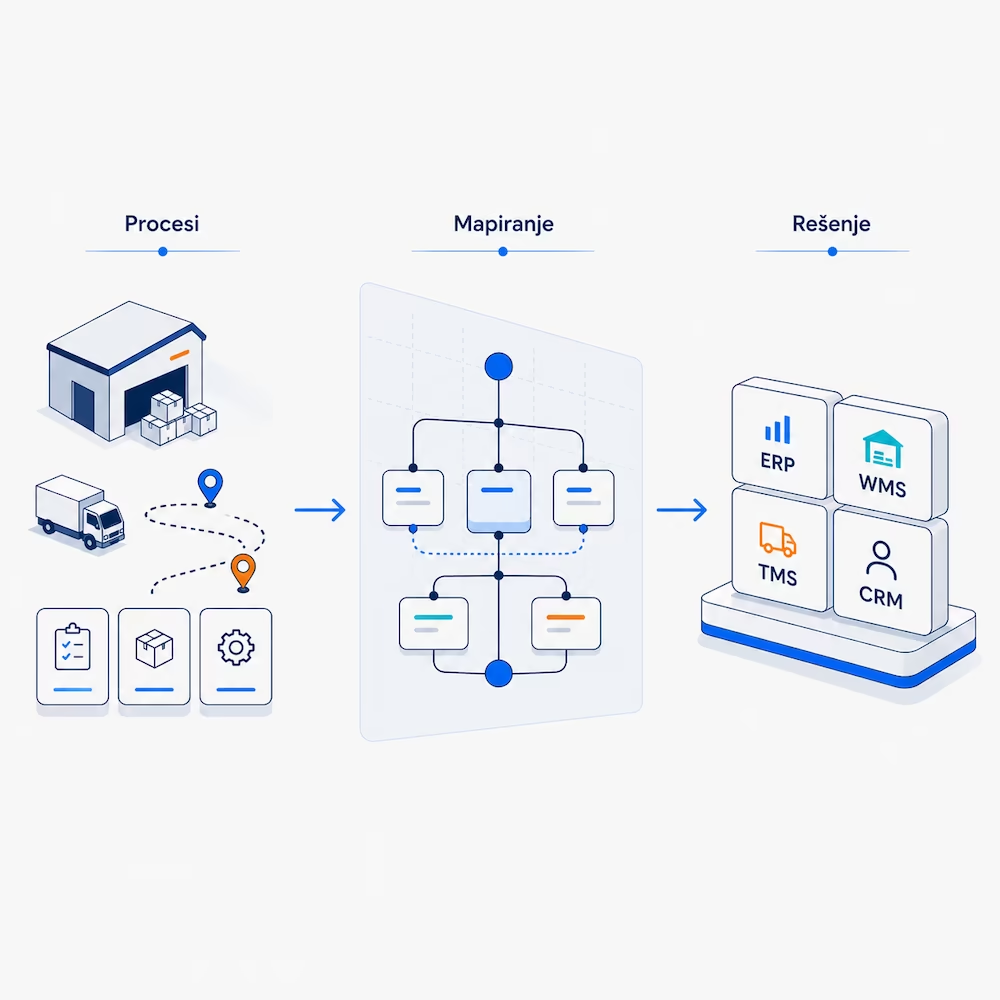
Detailed process analysis for a secure transition to digital business.
System architecture design that matches your actual workflow.
Clear needs mapping to eliminate unnecessary development costs.
Development and Customization of Business Platforms
Tailored Solutions for Transport and Logistics
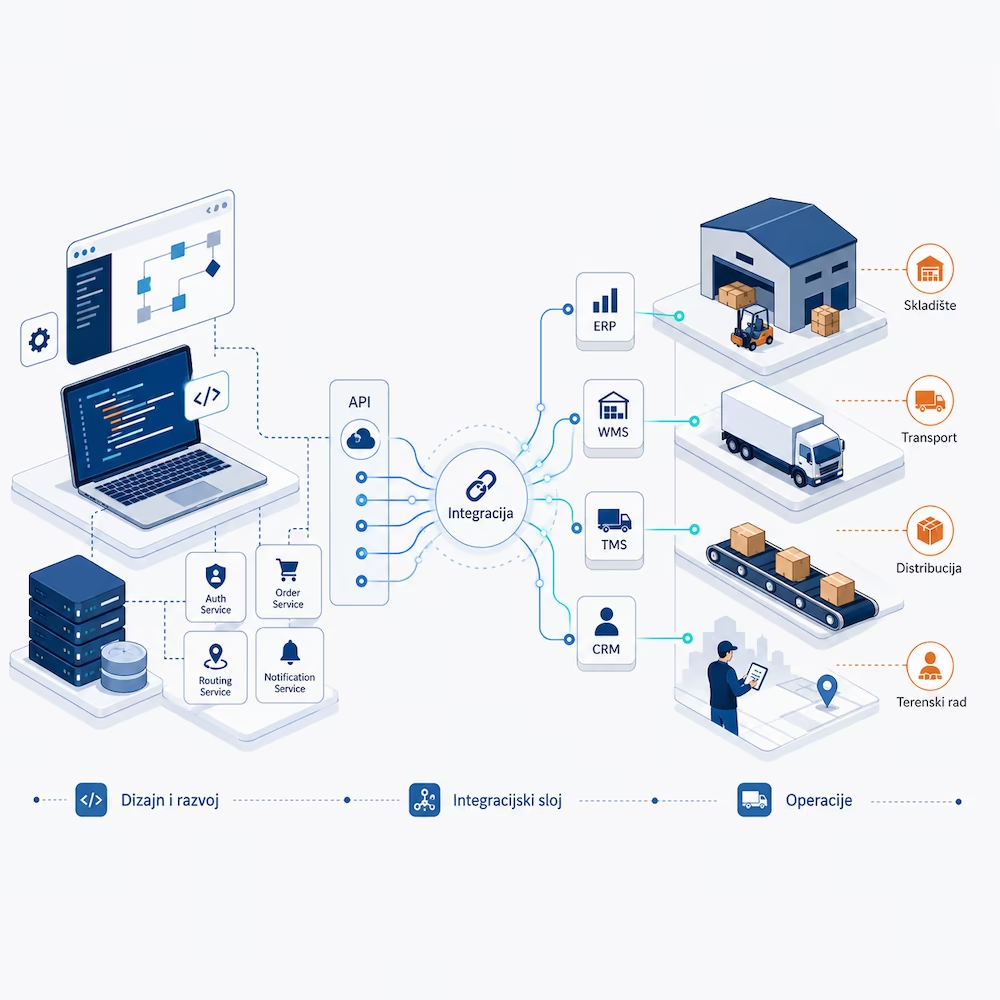
Development of ERP, WMS, and TMS solutions tailored to logistics.
Customizing the Odoo platform to your specific distribution requirements.
Solutions that follow your processes, not software limitations.
Integrations That Connect Systems and Processes
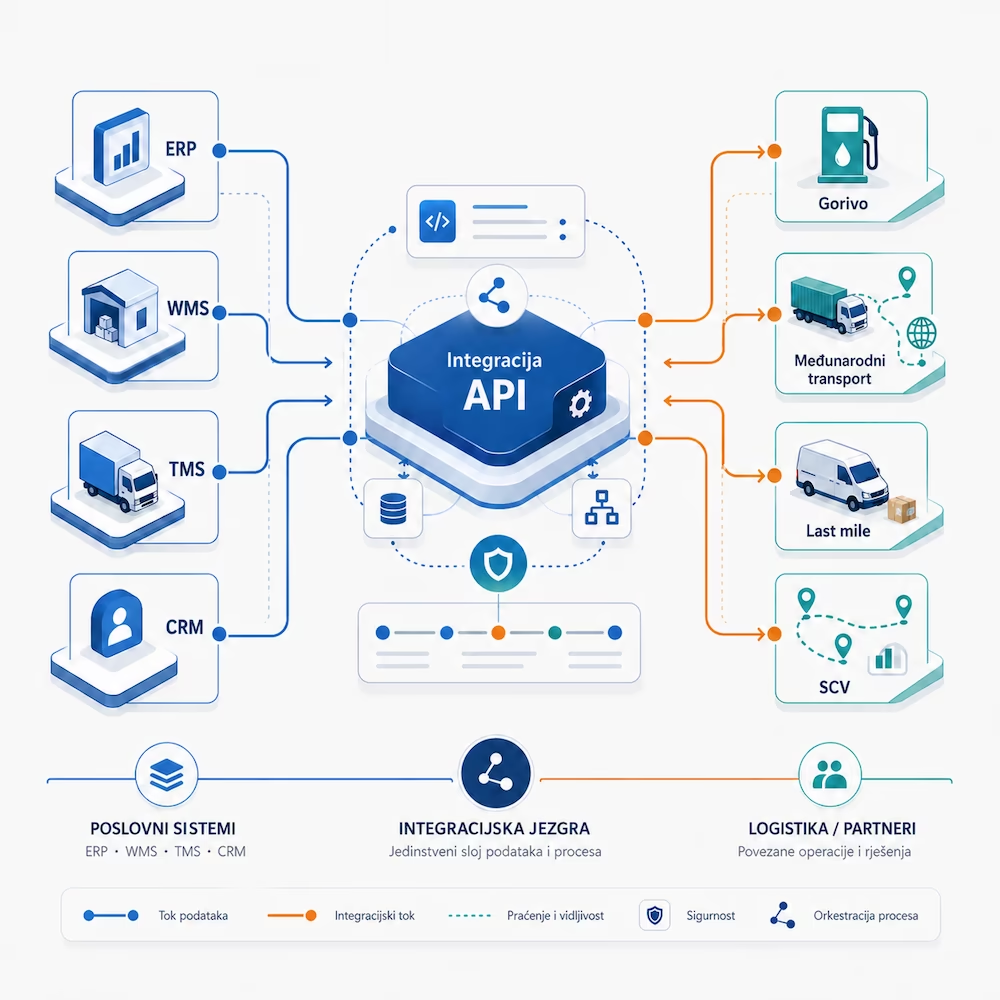
API Integration of Business and Logistics Platforms
Connecting ERP, WMS, and GPS systems into a single data flow.
Automated data exchange with partners, suppliers, and exchanges.
Eliminating manual data entry and drastically reducing human errors.
Core Features
Frequently Asked Questions
Development and integration services help a company connect different business systems into one organized digital flow. Instead of manually copying data between ERP, WMS, TMS, CRM, GPS, and other systems, integration allows data to move automatically between departments, applications, and users. This reduces manual work, errors, delays, and dependence on Excel spreadsheets, emails, and phone-based coordination.
Yes. As part of development and integration services, it is possible to design solutions where AI helps the client with data analysis, task automation, report preparation, demand forecasting, process optimization, or user support. Such solutions are developed according to the company’s real needs, with a clear definition of what AI should do, which data it uses, and where the user retains control over decisions.
No. The solution can function as a completely independent business system, such as an ERP, WMS, TMS, or CRM adapted to the client’s needs. Connecting with the MobTrack24 platform is an additional option for companies that want to link business processes with field data — vehicles, routes, GPS tracking, warehouses, work orders, dynamic routing, and other operational events.
Yes. We often develop and customize business systems on the Odoo platform, especially when the client needs a flexible ERP, WMS, CRM, or Field Service solution. Odoo makes it possible to adapt a wide range of business functionalities to the company’s specific way of working. When needed, we also work on other platforms, depending on the client’s existing software, project goals, and technical environment.
A custom solution is needed when off-the-shelf software does not match the way your company actually works. This often happens in transport, logistics, warehousing, distribution, and field operations, where every company has its own processes, rules, documents, reports, and workflows. Instead of changing the business because of software limitations, the system can be adapted to support the client’s real way of working.
In software development and integrations, we use modern AI tools as support in analysis, solution design, programming, testing, and documentation. AI helps analyze requirements faster, review technical solutions, prepare documentation, and accelerate certain parts of development. However, key decisions, system architecture, security, and solution quality are led by experienced experts from Mobile Solutions, MapSoft, and the partner team.
Development and integrations generate savings by reducing manual work, duplicate data entry, data errors, and the time required to process information. When systems are connected, less time is spent copying data, checking spreadsheets, sending emails, and resolving discrepancies between departments. Management receives more accurate information, employees work faster, and the company can more easily control costs, deadlines, inventory, deliveries, and execution quality.
Integrations can connect ERP, WMS, TMS, CRM, GPS systems, fuel systems, and systems for transport, warehousing, sales, dispatching, field work, and other business applications. The goal is to connect data on orders, vehicles, routes, inventory, deliveries, fuel, tasks, and invoicing into a single flow. In this way, the client gains a better overview of operations and reduces the need for manual data entry.
MobTrack24 has already been integrated with leading ERP solutions such as SAP, Microsoft, Odoo, and Pantheon, as well as with dynamic routing systems, logistics integrators, transport exchanges, cargo providers, fuel suppliers, and major retail chains. Completed integrations include Roadnet Technologies, DHL, NIS, OMV, Timocom, Shippeo, FourKites, NIC-place, project44, and Lidl. This means MobTrack24 has hands-on experience connecting GPS data, routes, fuel, deliveries, and business processes.
Because good software does not start with programming; it starts with understanding how the company actually works. Before developing a system, it is necessary to clearly understand who does what, which data is used, where errors occur, which processes are repeated, and what should be automated. Business analysis defines requirements, workflows, and priorities, so that the solution developed later solves real problems instead of becoming just another application that makes work more complicated.