Connecting Systems That Need to Work Together
In modern business, it is no longer enough for individual systems to function well on their own—the real value is created when they are connected and data flows across the entire operation without manual transfers, duplicate entry, or information loss. Through our API integration service for business and logistics systems, we connect ERP, WMS, TMS, CRM, and other specialized platforms into one unified functional environment. Integrations can be one-way or two-way, depending on the client’s needs, and may include the exchange of master data, orders, statuses, events, locations, costs, deliveries, and other operationally important information. The special value of this service lies in the fact that we do not view integrations merely as a technical task, but as a way to unify key processes across transport, logistics, distribution, warehousing, and the supply chain.
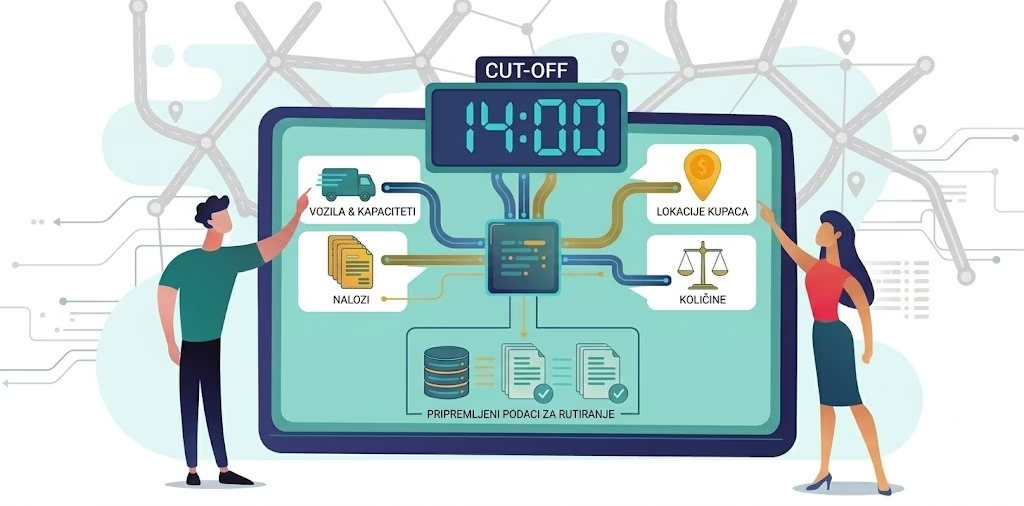
API integrations enable ERP, WMS, TMS, CRM, and other logistics platforms to exchange data automatically, reliably, and in line with actual business processes.and customization of business platforms enable faster deployment of ERP, WMS, CRM, and other solutions, supported by a stable technological foundation and functionalities tailored to a specific business.
When systems are connected properly, information no longer remains locked inside separate applications, but becomes part of a unified operational flow that supports faster execution, better control, and higher-quality decision-making.
Connecting Business Systems and Exchanging Key Data
Integrating ERP, WMS, TMS, CRM, and other systems enables automated exchange of data that is important for day-to-day operations. This may include synchronization of partners, vehicles, orders, delivery statuses, costs, inventory, work orders, and other data that must remain aligned across multiple systems.
One-Way and Two-Way Integrations Based on Real Processes
In some cases, it is enough for one system to send data to another, while in others a full two-way exchange and synchronization is necessary. That is why the integration model is defined according to the actual business logic, the role of each system, and the user’s operational needs.
Integrations Through Practical Logistics and Industry Scenarios
We implement integrations through practical use cases aligned with the client’s business environment. This includes, for example, connecting with ERP/WMS systems such as SAP, Odoo, and Microsoft Business Central; last-mile optimization platforms such as Roadnet; fuel systems such as OMV and NIS; international transport platforms such as DHL; freight and vehicle exchanges such as TIMOCOM; as well as supply chain visibility platforms such as Shippeo, FourKites, and project44.
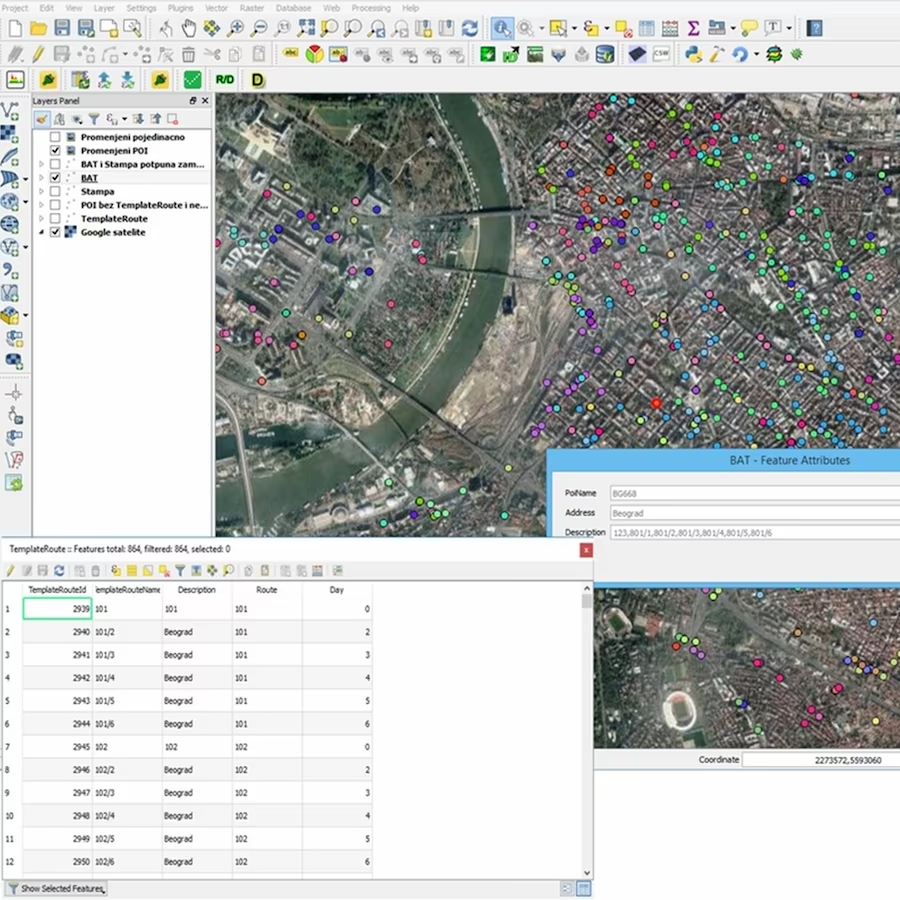
Result
The client receives a connected business and logistics environment in which systems exchange data with each other in a controlled, automated, and operationally useful way, with less manual work and better process alignment.
Key Benefits
Less Manual Data Transfer Between Systems
Data is exchanged automatically between platforms, reducing the need for manual entry, copying, and later reconciliation.
Integrations Tailored to Real Business Workflows
The connection model is defined according to how the company actually operates, rather than according to a generic technical scheme.
Experience in Logistics and Transport Integrations
Integrations cover practical business scenarios across ERP/WMS/TMS/CRM, distribution, fuel systems, international transport, and supply chain operations.
Stronger Control Over Data and Processes
When systems work together, information becomes more accessible, more up to date, and more useful for daily decision-making and operational management.