From Business Process to a Clearly Designed Solution
A successful ERP, WMS, TMS, or CRM implementation does not begin with software development, but with a precise understanding of business processes, operational requirements, and the user’s real business challenges. Through our business analysis and logistics information solution design service, we help companies define what the system truly needs to support, what the future workflow should look like, and how different processes should be connected into one functional whole. This includes needs analysis, process mapping, use-case development, definition of functional and technical requirements, as well as the creation of both conceptual and implementation-ready solution designs. The particular value of this phase lies in the fact that the future system is designed in line with the specifics of transport, logistics, warehousing, distribution, and field operations, whether the goal is to build a fully independent business solution or a system that will later be integrated with other platforms, including MobTrack24.
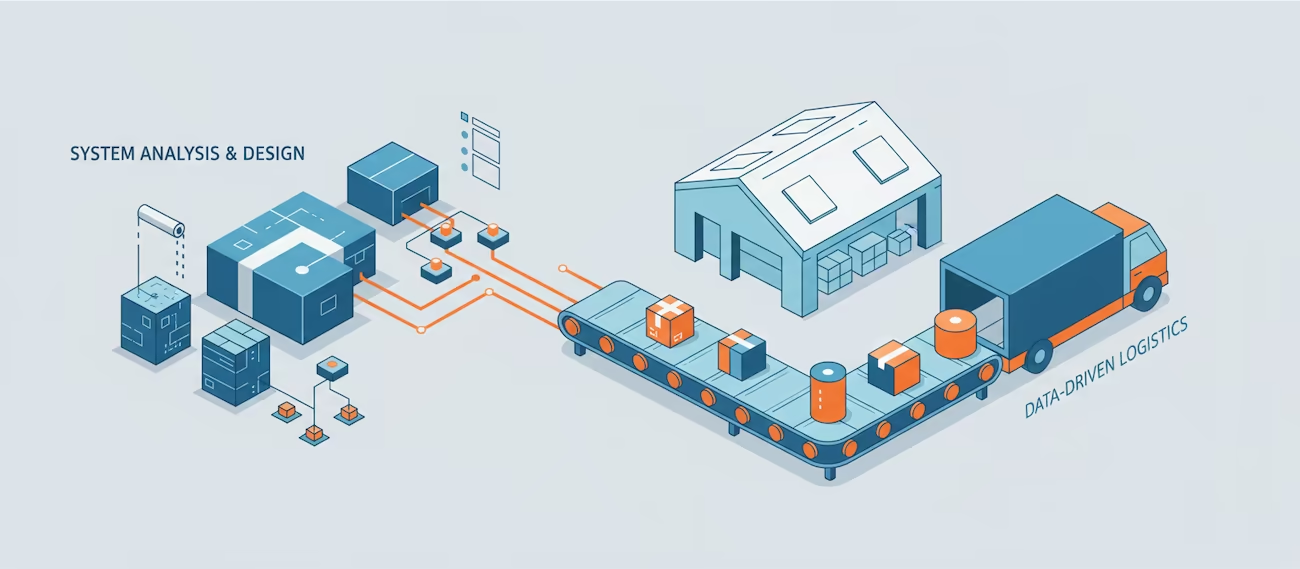
Business analysis and solution design make it possible to develop an ERP, WMS, TMS, or CRM solution based on real processes, clearly defined requirements, and a logically structured system architecture.
When business goals, workflows, and technical requirements are properly defined at the beginning of a project, development and implementation become more reliable, more efficient, and far better aligned with user needs.
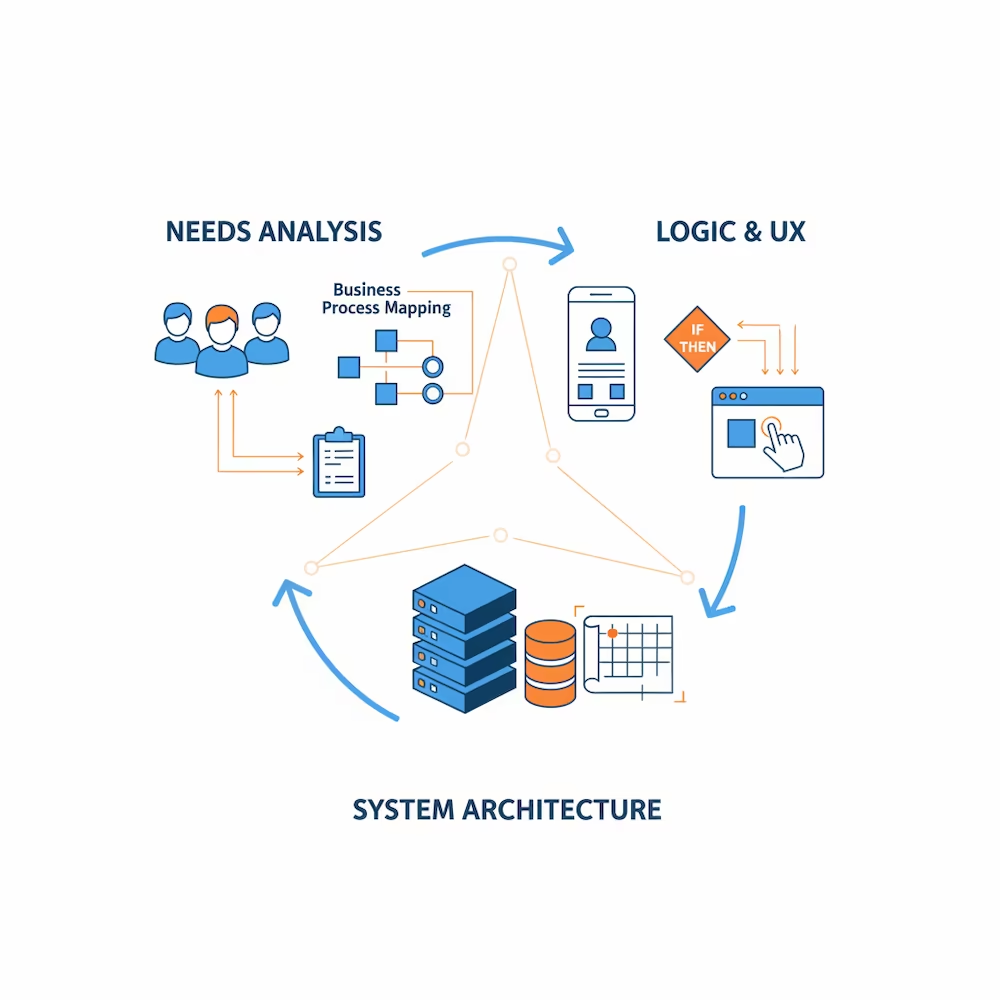
Needs Analysis and Mapping of Key Business Processes
The first step is understanding how the client operates today and identifying the processes that the new system should improve. This includes analyzing workflows, user roles, operational decision points, data sources, and the interdependencies between departments such as transport, warehousing, sales, dispatch, and administration.
Defining System Requirements and Use Cases
Based on the business analysis, the specific functional and technical requirements of the future solution are defined. Key use-case scenarios, business rules, expected data flows, and user interactions within the system are then developed so that development and implementation are based on clearly established priorities.
Designing the Architecture and Concept of the Future Solution
Once the processes and requirements have been defined, the next step is to design the system logic and architecture. This includes determining whether it is best to develop a completely new solution, adapt an existing platform, or combine multiple subsystems through integration, while maintaining a clear view of future scalability, maintainability, and further development potential.
Result
The client receives a clearly defined, business-grounded, and technically well-structured starting point for the development or implementation of an ERP, WMS, TMS, or CRM solution, with fewer uncertainties, better priorities, and more confident project decision-making.
Key Benefits
Clearly Defined Business Requirements
The system is planned based on real operational needs rather than assumptions or generic software templates.
Better Alignment Between Processes and Software
Business workflows, user roles, and operating rules are translated into the logic of the future information solution.
Lower Risk in Later Project Stages
Early analysis and solution design reduce the likelihood of incorrect functional decisions, additional costs, and later changes.
A Foundation for an Independent Solution or Future Integrations
The project foundation can serve as the basis for a standalone ERP, WMS, TMS, or CRM system, or for a solution that will later integrate with other platforms, including MobTrack24.